Most wardrobes are full and still feel as if there is nothing to wear. The usual reason is not a lack of clothes but a lack of clothes that work together. A smaller wardrobe, built from pieces that all go with one another, solves that problem and tends to cost less over time. Ten pieces is not a rule, simply a useful size: small enough to know every item well, large enough to see you through the seasons.
Start with colour, not items
Before buying anything, settle on a short palette. Navy, grey, stone, camel, white and pale blue are an easy starting point: every one sits comfortably beside the others, so almost any top works with any pair of trousers. Add one or two deeper colours, such as bottle green or burgundy, for interest. If a piece only goes with one other thing you own, it is probably not a foundation piece.
The foundations
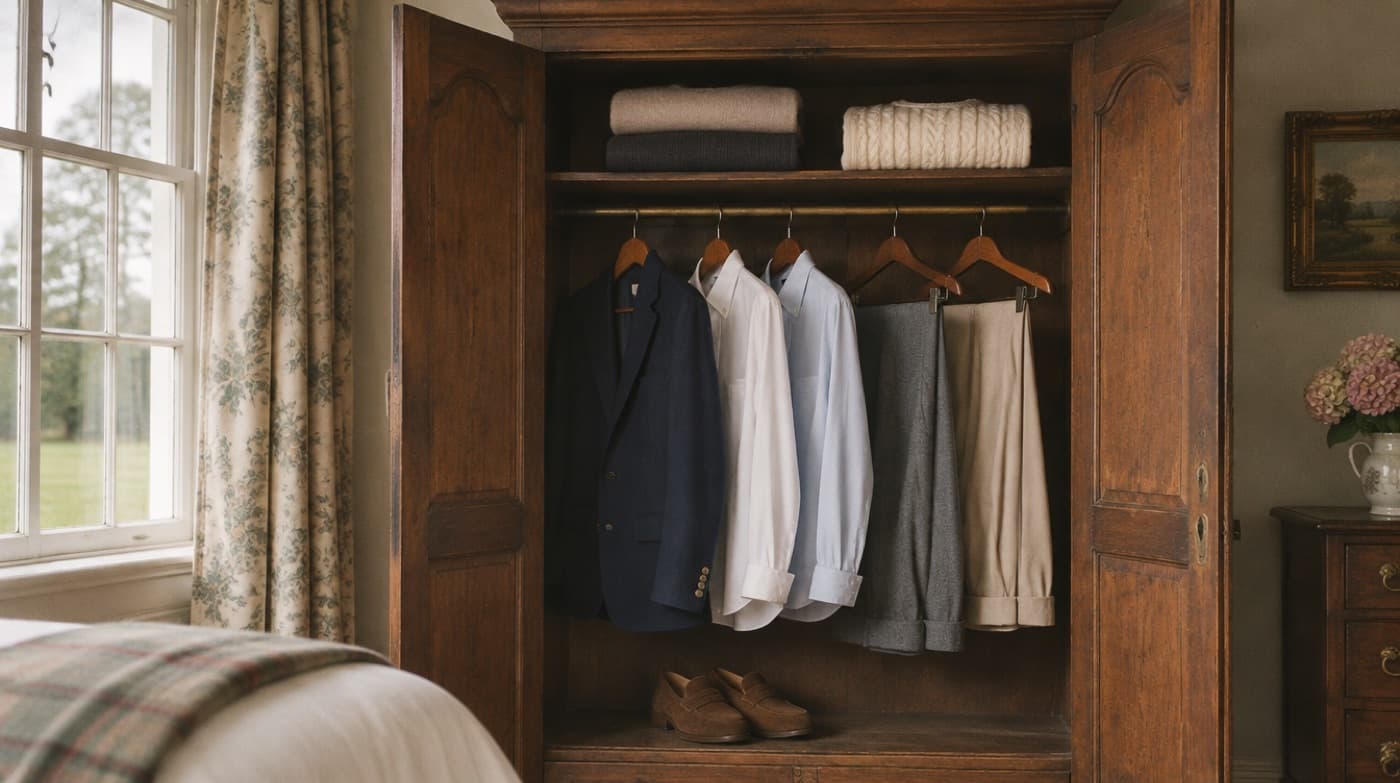
A practical set of around ten might look like this:
- Two Oxford shirts, one white and one pale blue.
- One fine knit, such as a cashmere crewneck, and one heavier jumper for cold days.
- A polo shirt for warmer weather.
- One pair of wool trousers and one pair of cotton chinos.
- A navy blazer.
- A coat suited to where you live: a trench, or a gilet for layering.
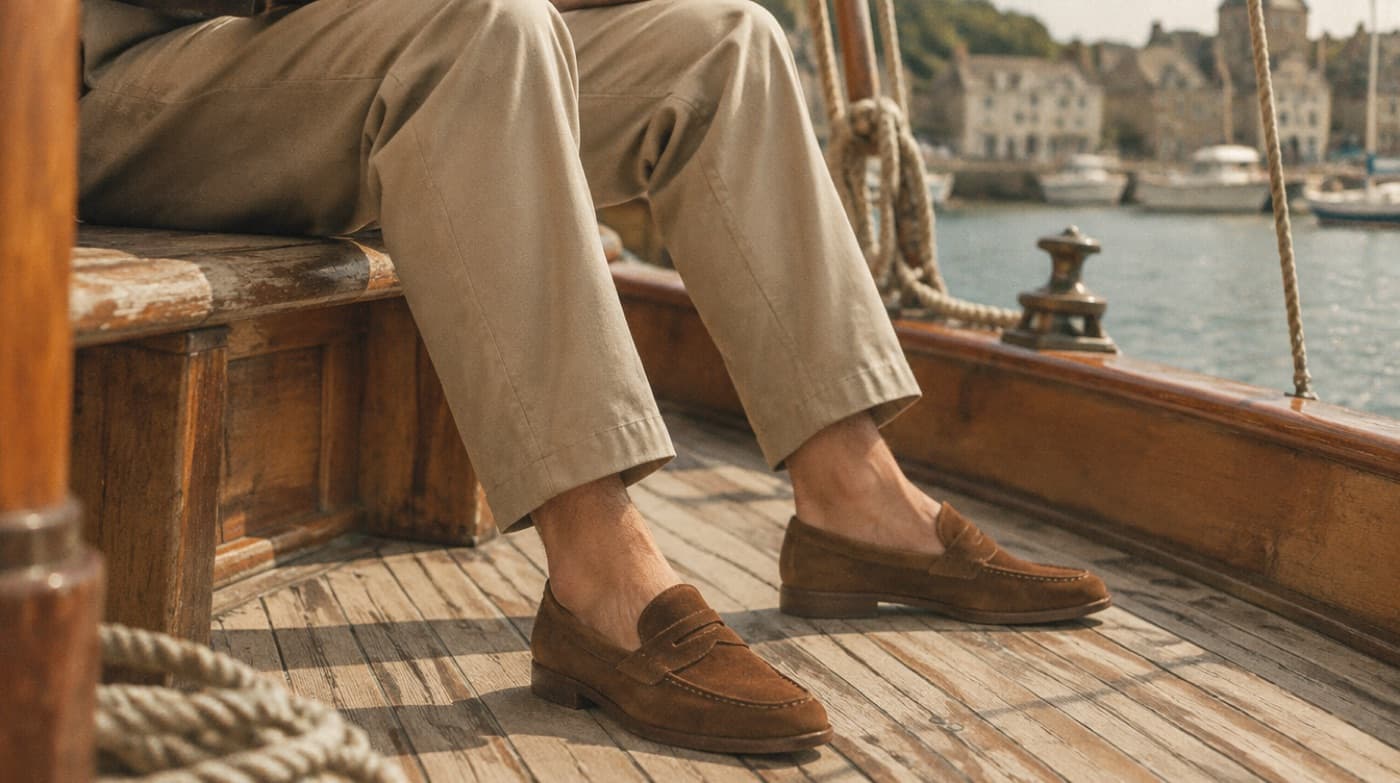
- One pair of shoes that can be dressed up or down, and a good leather belt.
The Oxford shirt does more work than almost anything else on the list. It can be worn under a jumper, with a blazer, or on its own with the sleeves rolled.
Pleated wool trousers are the piece most people leave out, and the one that makes the rest look considered. They are smart enough for an office and relaxed enough with a jumper at the weekend.
Buy slowly, in order
There is no need to buy everything at once. Begin with what you will wear most often, which for most people is shirts, knitwear and trousers, and add the larger pieces as you find you need them. A navy blazer earns its place quickly: over an Oxford shirt and chinos it covers most occasions that call for something smarter than a jumper, without needing a full suit.
Before each purchase, it helps to name three things already in your wardrobe that the new piece will be worn with. If you cannot, wait.
Look after what you have
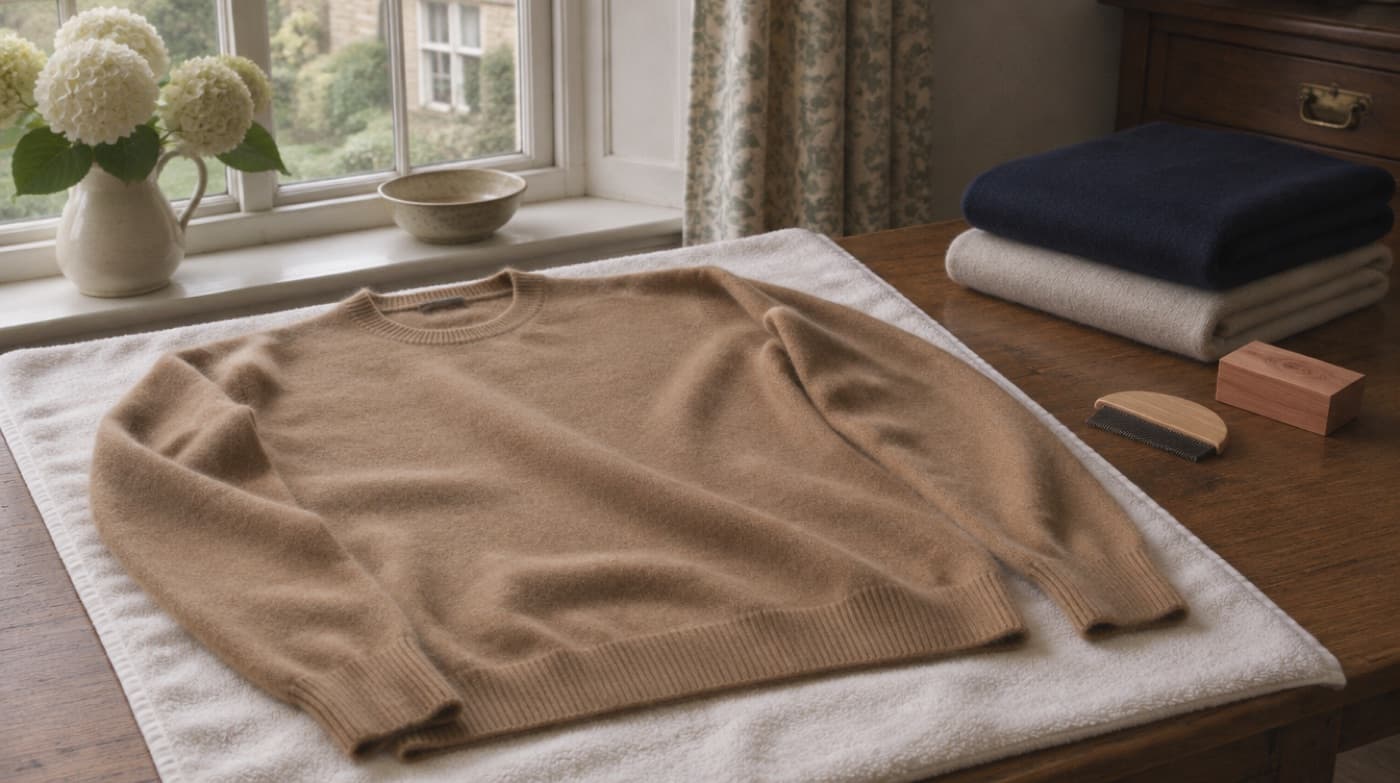
A small wardrobe gets worn often, so care matters more. Read the composition and care instructions before you buy, not after. Brush wool after wearing, fold knitwear, hang tailoring on a shaped hanger, and give shoes a day off between wears. Find a tailor you trust for hems and sleeves; a small alteration often does more for how a piece looks than anything else.
The result is a wardrobe that takes very little thought in the morning. Everything goes with everything, and each piece has a reason to be there.