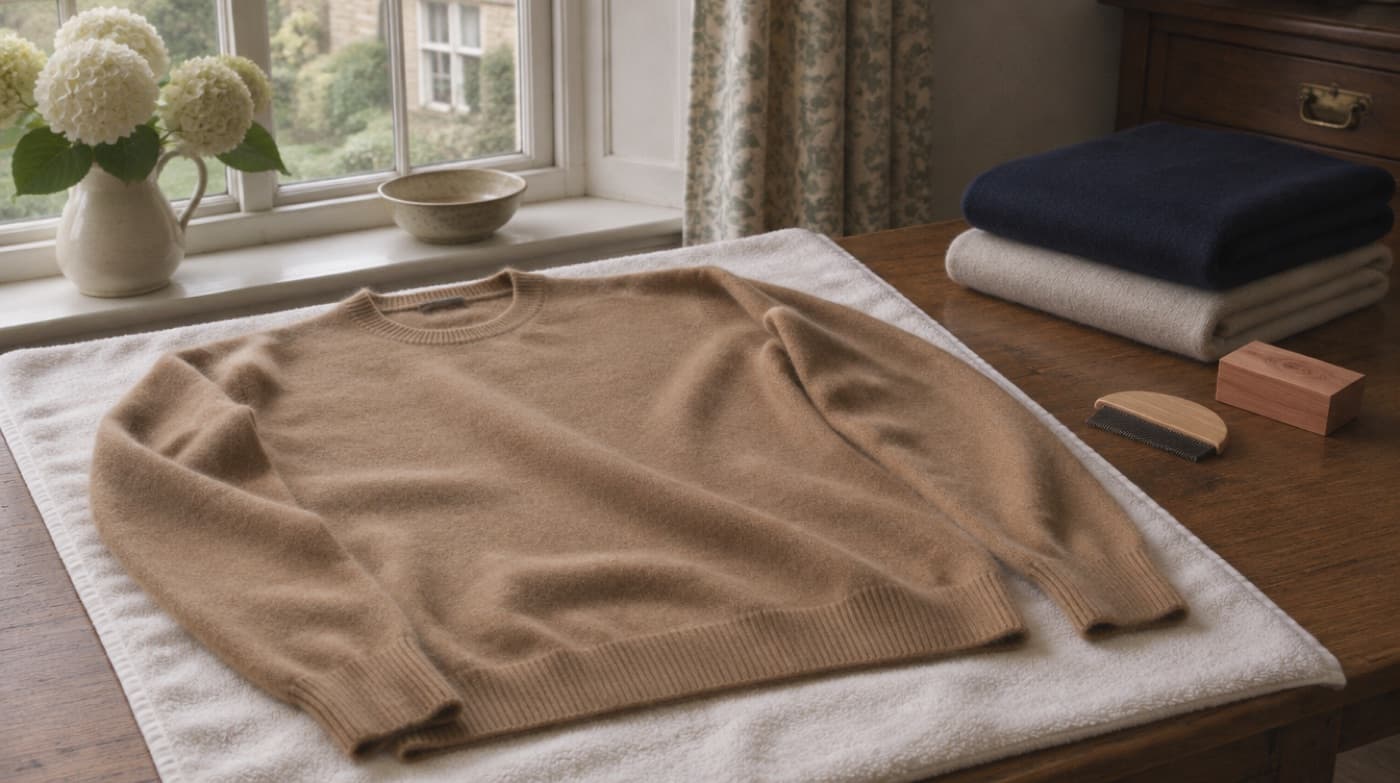
Cashmere has a reputation for being delicate. It is softer than most wool, and it asks for a little more attention, but it is not fragile. Looked after sensibly, a good cashmere jumper keeps its shape and softness for years. Most of the damage it suffers comes from three things: heat, friction and moths. Avoid those and you have done most of the work.
Wear it, then rest it
Cashmere fibres recover their shape when they are given time. Try not to wear the same jumper two days running; a day folded on a shelf lets the knit relax. Air it after wearing rather than washing it straight away. Cashmere does not need washing as often as cotton, and every wash, however careful, is a little wear. A few wears between washes is usually fine, unless it is marked or has been worn next to the skin on a warm day.
Washing by hand
Always check the care label first. If it allows hand washing, this is the gentlest route:
- Turn the jumper inside out.
- Fill a basin with cold or lukewarm water, never hot, and add a small amount of detergent made for wool or cashmere.
- Submerge the jumper and press the water through it gently for a minute or two. Do not rub, twist or scrub.
- Leave it to soak for no more than ten minutes.
- Rinse in clean water at the same temperature until no soap remains.
- Press the water out with your hands. Never wring it.
Some washing machines have a wool or hand-wash cycle that is gentle enough, but only use it if the label allows and the jumper sits in a mesh laundry bag. If in doubt, a dry cleaner is the safe choice.
Drying flat
Lay a clean, dry towel flat, place the jumper on it and roll the two up together to draw out the remaining water. Unroll, then lay the jumper flat on a fresh towel or a drying rack and ease it back into shape with your hands, paying attention to the cuffs, hem and neckline. Keep it away from radiators and direct sunlight, and never tumble dry it. Hanging wet cashmere will stretch it, sometimes for good. Expect it to take a day or so to dry fully.
Pilling is normal
Small balls of fibre often form where a jumper rubs: under the arms, at the elbows, along the sides. This is not a sign of a fault. Loose short fibres work their way to the surface in the first few wears, and pilling usually slows once they are gone. Remove the pills with a cashmere comb or a fabric shaver, working gently in one direction on a jumper laid flat. Avoid pulling them off with your fingers, which can draw out longer fibres. Rough bag straps and backpacks speed pilling up, so it is worth noticing what your jumper rubs against.
Storing, and keeping moths away
Fold cashmere; do not hang it, or it will stretch at the shoulders. Clothes moth larvae are drawn to natural fibres, and particularly to garments carrying traces of food or body oils, so always put cashmere away clean. For the warmer months, store it folded in a breathable cotton bag or a sealed garment bag, with cedar blocks or lavender sachets, which many people find help to deter moths. Refresh the cedar with light sanding once a season. Take your knitwear out from time to time, shake it, and check the folds; moths prefer dark, undisturbed corners.
None of this takes long. A cold wash a few times a season, a towel, a comb and a clean drawer are enough to keep a cashmere jumper looking as it should.